You may not think of meditation as a tool to improve your cycling, but master sports and meditation specialist Patrick Sweeney knows that it’s one of the best-kept secrets of top performers—on and off the bike. In Tuscany this spring, you can join him for an immersive mind/body experience, but here, he’s sharing a few of his best tips to boost your riding.
Patrick’s journey began over 40 years ago when he was in school. He studied philosophy as a precursor to law school, and found himself drawn to the deeper inquiries that he found there. “In particular, Buddhism and ancient Greek philosophy interested me,” he says. “What I liked about the Buddhist philosophy was it wasn’t just a cognitive thing, it was a how to live in accord with one’s highest sense of what is most important in life, and that got me started. So things like yoga and meditation were part of my college experience.”
After school, he worked the stock exchange in Chicago and he realized he was experiencing a disconnection from those original philosophical interests. He stayed for a while—until the calling became too loud. “At a certain point, I moved to a Tibetan Buddhist retreat center in Vermont, and really got into it at a very deep level, and some years after that, I was empowered to and trained to teach in this tradition,” he says. “30 years later, I’m still doing it.”
Patrick also developed a love of cycling along the way, and as his experience with teaching meditation grew, he saw how it could be beneficial for athletes.
“I essentially became a mental game coach using meditation skills with professional cyclists, and the ones who come around to it are able to really see how their mindset will determine their training experience as well as their race experience,” he says. “For cyclists, it’s about finding the elusive flow state, this quality of being in the zone, a sense of kind of stepping outside of time, and into that sense of knowing intuitively what’s next.”
Want to find flow? While there are many approaches, Sweeney tends to gravitate towards three practices: Meditation, breathwork and purposeful discomfort—his preference is cold plunging.
Meditation
Meditation—becoming aware of your thoughts and observing them, rather than judging them—is at the core of everything. Patrick leads guided meditations regularly at retreats, as he’ll do during the upcoming Mind and Body week in Tuscany, but he also urges cyclists to find time throughout the day to just sit quietly and tune into their thoughts, starting to see them rather than just let them swirl around. This will be incredibly helpful out on the bike.
“We have to have a vision,” he says. “We have to have a framework of engagement that we’re working with. And within that, there needs to be intuitive adaptation, spontaneity and the ability to read changing circumstances as they’re occurring, both outside you—meaning your competition, is it raining? Is it windy?—and most importantly, the changing circumstances within yourself. You need to hear what you’re telling yourself during a ride—things like ‘I don’t have the legs today’—and understand that even though you have a thought at a particular moment, it’s just a moment in time. You can change that thought, and ultimately change the outcome of your ride.”
Breathwork
People have been experimenting with the breath for thousands of years, says Patrick. “Now we have machines, and we have all sorts of supplements, but then, they only had the body, and they used it: They began to discover that changing rhythms of the breath would impact how they felt, and that’s something we can harness today,” he explains.
Consider the exhale: “We know that if we emphasize the length of our exhalation and exhale twice as long as we inhale, that that’s going to help bring our parasympathetic nervous system online, we’re going to calm down a bit, and we’re going to bring about a relaxation and healing response,” he says.
On the other side of the coin, an inhale can do the opposite: “Similarly, if we need to get that sympathetic nervous system on board, if we need to get ready for a race or a ride or whatever we’re doing, we know that we can emphasize the inhalation and hold the inhalation for a count of 10, and then exhale slightly shorter,” he says. “That’s going to get you ready to perform.”
Cold Plunging
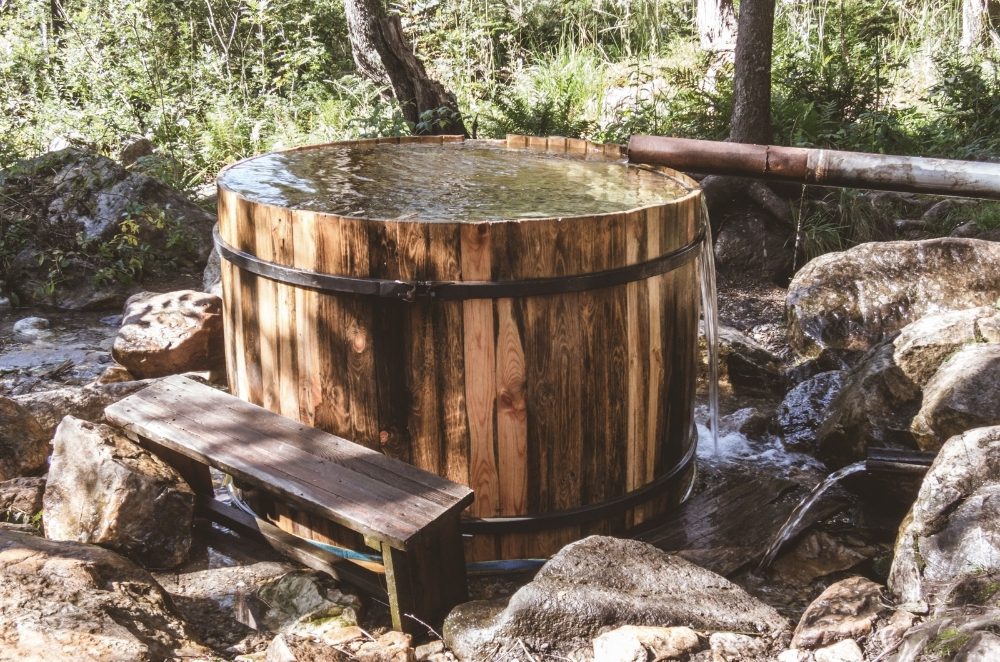
“Many people, when they do it, immediately say that they’ve never felt this alive and completely present, just as a result of working with my breath while being immersed in this cold water,” Patrick says. It’s not about gritting your teeth and bearing it, he says things like cold plunges are opportunities to lean in and explore the discomfort in a safe environment. That way, when you are faced with discomfort on the bike, it’s not an unknown feeling.
Breathwork and purposeful discomfort like cold plunging are a key part of Sweeney’s process, and will be a daily ritual on the Tuscan trip he’s leading. The cold plunges are set up on the terrace at Borgolecchi, so as you plunge in the morning to kickstart your brain and prepare for the day ahead, you’ll be treated to a beautiful vineyard view. As Sweeney says, it’s not about gritting your teeth and getting through these moments. Instead, it’s about accepting the challenges and surrendering to the challenges.

Patrick has seen these elements come together to change how a rider is able to show up on the start line—or at the group ride. His goal on his upcoming trip is to help riders get in touch with themselves in new ways, unlocking new levels of success on and off the bike.
Ultimately, it comes down to knowledge. “InGamba means ‘in the know,’ and often, we think of it as knowing the best restaurant in town, the best bottle of wine to order, the dish you’re going to get in this hole in the wall that’s going to taste amazing—those outer things,” he says. “But the inner inGamba is the subjective experience of the person. There’s an outer face to a person when you meet them, and then there’s the inner conversation going on inside of you, and this week is designed to help you tap into that inner knowing.”
For those who understand that cycling is much more than riding a bike, this trip is for you. Sweeney stresses a more holistic approach, combining physical, mental and emotional training into a single, unified model. In addition to the physical aspects of racing or simply riding, Sweeney also examines how mental clarity or emotional regulation are central ingredients to better performance on a bike. We know that the way that a cyclist deals emotionally with the setbacks incurred in a crash during a race will impact their comeback. Similarly, the way a working professional deals with their own time constraints will impact the ability they have to maximize the time they have to ride and train.
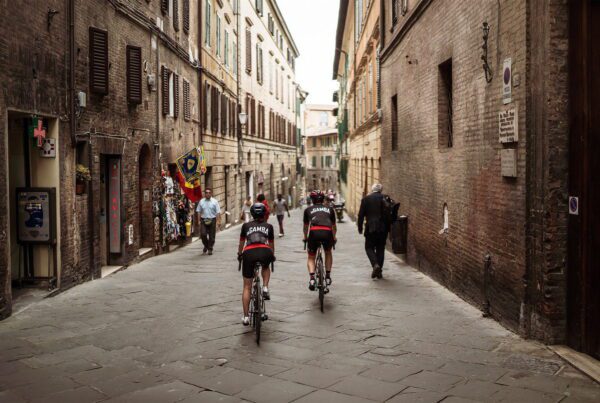
On this trip, mornings begin early with a yoga session and breathing practices, immediately followed by a cold plunge on our open-air terrace at Borgolecchi. After breakfast, there will be a guided meditation at our service course before rolling out for one of our scenic rides. The week’s riding will start out in a slightly more relaxed manner as we build up both physically and mentally for our ultimate ride along the challenging roads of the Crete Senesi, home to many of the key gravel roads found in Strade Bianche. And of course, enjoy all the amenities that Borgolecchi has to offer, from perfect post-ride meals prepared by Tomi, our in-house chef, to the best local wines that the Chianti region has to offer.
If you want to take your cycling to the next level, this is the chance of a lifetime.