
Why the rolling hills between Siena and the sea remain the spiritual home of road cycling — and how to ride them properly.
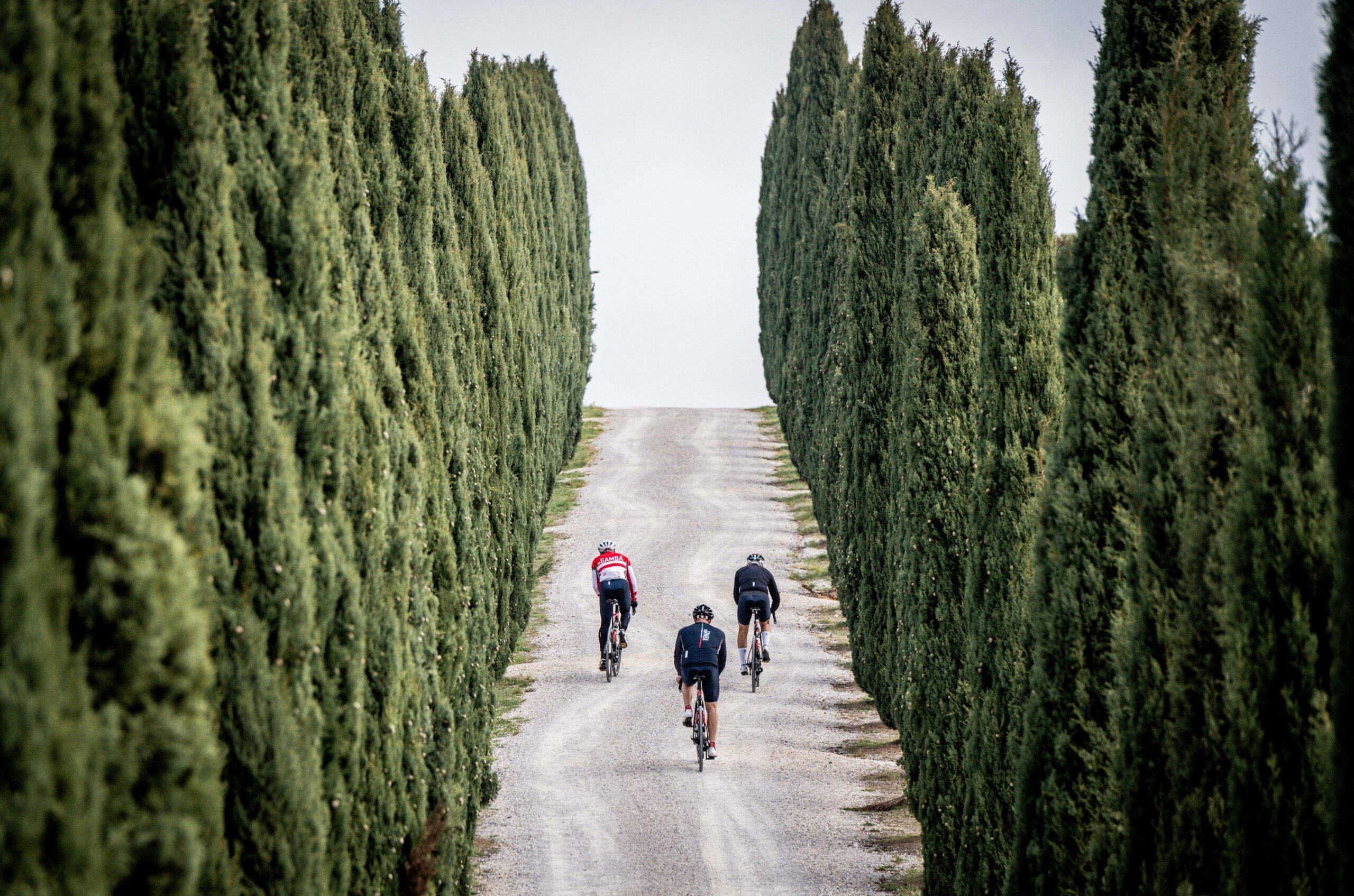
There’s a moment, somewhere on a gravel road outside Gaiole in Chianti, when Tuscany stops being a backdrop and becomes the whole point. The white dust coats your tyres. Ahead, a cypress-lined ridge catches the last of the afternoon light. Your legs are telling you one story; the view is telling you another. You slow down, not because you have to, but because it would be a crime not to.
This is why cyclists keep coming back. Not just for the climbs — though they are exceptional — and not just for the food and wine — though they are extraordinary. It’s the way everything here conspires to make riding feel like the most natural thing in the world. Tuscany is, quite simply, the greatest cycling destination on the planet.
This guide covers everything you need to know to ride it well: when to go, what routes to ride, what the roads are really like, what to eat, and how to make sense of a place with more cycling history packed into its hills than almost anywhere else.
Why Tuscany is Different
Most great cycling destinations earn their reputation through one defining characteristic — the mountains of the Pyrenees, the cobbles of Flanders, the coastline of the Algarve. Tuscany has no single calling card. What it has instead is an almost implausible concentration of everything good.
The terrain is varied in a way that suits riders of different dispositions. There are genuine climbs — nothing at extreme Alpine altitude, but sustained, relentless ascents that reward patience and punish hubris — and rolling countryside that can be ridden conservatively or attacked with aggression, depending on your mood. The roads, whether tarmac or the famous strade bianche, are narrow enough to feel intimate and quiet enough to carry nothing but birdsong and the sound of your tyres.
Then there’s the context. Tuscany has been a canvas for professional cycling since the early days of the sport. Strade Bianche, one of the most beloved one-day races on the calendar, finishes on the Piazza del Campo in Siena — the same Piazza del Campo that has hosted civic pageantry since the Middle Ages. When you descend into Siena at the end of a long day in the saddle, you’re not just a tourist finishing a ride. You’re arriving the way champions arrive.
When to Go
The sweet spot is April to June, and September to October. During these windows, the temperatures are forgiving, the light is extraordinary, and the roads — particularly the quieter white roads — are at their best.
Spring brings the countryside to vivid life. The vines are still bare in early March, but by April the slopes around Radda and Castelnuovo Berardenga are turning green, wildflowers border the climbs, and the days are long enough to ride properly without feeling rushed. This is also when Strade Bianche takes place, and if you’ve timed your visit to coincide with race weekend, the atmosphere in Siena is something you won’t forget.
Autumn has its own particular quality. The harvest brings an energy to the villages, the light turns golden, and the air loses the density of summer. October is arguably the most beautiful month to be on a bike anywhere in Italy.
July and August are not recommended for serious riding. The heat is intense, the tourist infrastructure is maxed out, and the roads through the more popular areas carry a volume of traffic that sits poorly with the meditative pace that makes Tuscany special.
The Roads: Tarmac and the White Roads
There are two quite different cycling experiences in Tuscany, and the divide between them is mostly one of surface.
Tarmac. The roads connecting the main towns and villages of the Chianti zone are well-maintained, scenic, and varied. There are classic climbs — the road up to Volpaia, the ascents around Panzano in Chianti, the approach to Montalcino — that will test anyone. Traffic is generally light outside of summer, and the gradients are rarely brutal in the way that Alpine passes are. But they are consistent. Tuscany doesn’t do flat.
The white roads. The strade bianche — literally “white roads” — are the unpaved farm tracks and ancient droving routes that connect the estates and villages of the Crete Senesi and the southern Chianti. They’re surfaced with crushed pale limestone, pale as bone in the summer sun, and they demand a slightly different approach to riding. They’re loose in dry conditions, sticky after rain, and occasionally deeply rutted in winter. A bike with wider tyres — 30mm or above — handles them comfortably. A dedicated gravel bike is the obvious choice if you intend to spend serious time on them.
What the white roads offer in exchange for the additional technical demands is access to a Tuscany that feels entirely untouched. The Val d’Orcia, in particular — the UNESCO-listed landscape of rolling clay hills south of Siena — is one of the most beautiful places to ride a bicycle anywhere in the world. The silence is complete. The views stretch for miles. There are sections where you can go an hour without seeing another vehicle.
Riders have been grinding gravel in Tuscany long before it became fashionable elsewhere. The region didn’t need a global trend to validate something that locals have always known.
Essential Routes and Regions
The Chianti Classico Zone
The heartland. The wine country between Florence and Siena — Greve, Panzano, Radda, Gaiole, Castelnuovo Berardenga — is the most famous and most rewarding cycling territory in the region. The roads are endlessly varied, the villages are beautiful without being sanitised, and the density of interesting cycling within a small area means you can spend a week here and never repeat a route.
The classic loop from Lecchi or Gaiole, heading north through the vineyards and returning via the climb above Brolio castle, is a benchmark ride — challenging, scenically extraordinary, and utterly Tuscan.
The Crete Senesi
South and east of Siena, the landscape changes character completely. The rounded clay hills of the Crete — the famous biancane, pale and bare — make for some of the most dramatic cycling scenery in Italy. The roads here are quieter and the terrain more exposed. In spring, when the wheat is green and the poppies are out, it’s vertiginously beautiful. This is prime white road territory, with long unpaved stretches connecting the farms and abbeys of the interior.
The Val d’Orcia
Further south again, a UNESCO World Heritage Site and the landscape that appears on every second Tuscan postcard. The roads here feel ancient because they are — some of these tracks have been in continuous use since the Middle Ages. The towns of Pienza, Montalcino, and Bagno Vignoni punctuate routes that could otherwise feel entirely removed from the present century.
Montalcino deserves particular attention. The climb to the town itself is excellent, and the surrounding roads — connecting the Brunello estates with the Val d’Orcia below — offer some of the finest cycling in southern Tuscany.
Siena and the Strade Bianche Sectors
For riders with an appetite for cycling history, tracing the actual sectors ridden in Strade Bianche has become something of a pilgrimage. The race uses multiple gravel sectors of varying length and difficulty, with the final kilometres into Siena offering an experience that is genuinely moving — particularly if you’ve done it the hard way, after a full day in the saddle.
What to Eat and Drink
Tuscany’s food culture and cycling culture share an interesting characteristic: both reward patience and punish shortcuts.
The regional cuisine is built on a relatively small set of ingredients — Chianina beef, white beans, local olive oil, porcini mushrooms, black truffle in season, and bread made without salt — transformed by technique and time into something that bears very little resemblance to what passes for Italian food elsewhere. A ribollita made properly, with two-day-old bread and a base cooked low and slow, is one of the finest things a cyclist can consume after a hard day’s riding. The caloric density is an added bonus.
Pasta in Tuscany is typically egg-based and fresh — pici (thick, hand-rolled spaghetti) is the local speciality, usually served with a simple ragù, wild boar sauce, or — best of all — all’aglione, the local garlic sauce that is less aggressive than it sounds and more addictive than it should be.
Wine requires little introduction. The Chianti Classico DOCG, with its gallo nero (black rooster) seal, is the region’s signature red — a Sangiovese-dominant blend that has more complexity, tannic backbone, and food-friendliness than its reputation in export markets might suggest. Brunello di Montalcino is the more prestigious proposition, aged for years before release and built for the long haul. For a post-ride aperitivo, Vernaccia di San Gimignano — a crisp, mineral white — is the understated choice of locals.
The café culture deserves mention. The mid-morning coffee stop is not optional. There is a particular pleasure in pulling into a tiny bar in a village that appears to have no function other than serving the surrounding farms, ordering a double espresso and a cornetto at the counter, and standing alongside a farmer or two in full cycling kit. This is la dolce vita made practical.
Getting There and Getting Around
Florence (FLR) is the most convenient gateway. The airport is small enough to make transfers easy, and the city sits at the top of the Chianti zone, allowing for a relatively direct transfer south to wherever you’re based.
Pisa (PSA) is the larger alternative, with more transatlantic connections. It’s slightly further from the main cycling territory but still entirely manageable — the drive down to the Chianti is around 90 minutes.
Within Tuscany, a support vehicle is essentially mandatory if you want to explore with any freedom. The terrain is hilly, the stages are long if you’re routing properly, and the logistics of carrying luggage between bases are unworkable without one. This is one of the reasons a properly organised trip makes such a difference — the freedom to ride hard and arrive somewhere knowing that the vehicle has gone ahead with everything you need is a genuine luxury.
The Gravel Question: What Bike to Bring
For a trip that mixes the classic Chianti road riding with any meaningful time on the white roads, a gravel bike is the most versatile choice. A 30–38mm tyre width handles the strade bianche comfortably while remaining quick and responsive on tarmac. Modern gravel bikes with wider clearances and endurance geometry make the longer days considerably more comfortable.
That said, a road bike is entirely viable for riders who want to stick to tarmac. The major climbs and classic loops are all surfaced, and there’s no shortage of extraordinary road riding if the white roads are not your preference. A road bike with 28mm tyres will handle the occasional rough tarmac surface without drama.
If you’re riding with inGamba, the Pinarello Dogma F is available as a rental — the same platform ridden by some of the best professionals in the world. There are few more fitting ways to take on Tuscany’s climbs.
Riding Tuscany with inGamba
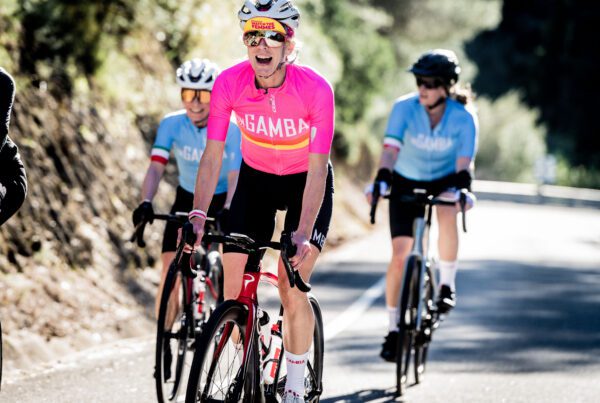
inGamba has been running trips in Tuscany for over a decade, and the region is the closest thing the company has to a home. The base at Borgolecchi, in the heart of the Chianti Classico zone, sits within striking distance of almost every great ride in the region, and the team’s intimate knowledge of the roads — including the unmarked shortcuts, the hidden gravel descents, the café stops that don’t appear on any map — is the product of thousands of hours spent exploring this landscape.
The trips are structured around the Mangia, Beve, Bici philosophy — eat, drink, ride — and the itineraries reflect that. The days on the bike are serious and satisfying. The evenings, over long tables and good wine, are equally so. The soigneurs, mechanics, and guides who make it all work come from the top levels of professional cycling, and it shows.
For spring 2026, there are several ways to experience Tuscany with the team:
The Chianti Classico is the flagship trip — the classic inGamba Tuscany experience, built on years of refining a route and a programme that puts the best of this region in front of riders over six days. Guide Giorgio Valvassori, who has been exploring these roads for over two decades, leads the way. Multiple departures run through April, May, and June, with spaces still available across several dates.
The White Roads Gravel Adventure goes deeper into the strade bianche territory — more gravel, more exposure to the Val d’Orcia and the quieter southern roads, more of what makes Tuscany distinct from any other cycling destination. Running in March, it’s ideal for riders who want to experience the region before the season crowds.
The Strade Bianche Experience takes the iconic race as its centrepiece — riding the actual sectors, arriving in Siena the way the professionals do, watching the race with the perspective of someone who understands what those roads cost. This trip runs in early March, timed to coincide with race weekend.
Tuscany with David Arthur (April) pairs the classic Chianti programme with the popular Just Ride Bikes presenter — a special edition for those who want the full inGamba experience with the additional dimension of a guest rider who communicates the joy of cycling as well as anyone working in the medium.
Tuscany Photography Week with James Startt (April) is built for riders who want to see Tuscany through a different lens — literally. James Startt, one of cycling photography’s most respected practitioners, leads a trip that combines proper riding with instruction in capturing the landscapes and moments that make this region so compelling.
A Tuscan Trip for the Body and Soul (April/May) integrates meditation, yoga, and recovery practice with the core riding programme — for riders who want the physical challenge alongside something more intentional.
All trips are based at or near Borgolecchi, are fully supported by inGamba’s team of soigneurs and mechanics, and include accommodation, food, wine, and transfers as standard. They fill quickly.
A Final Word
The thing about Tuscany is that it demands nothing of you except attention. Pay attention to the road. Pay attention to the light on the hills at six in the evening. Pay attention to what’s in your glass. Pay attention to the person who’s been riding these roads for twenty years and knows the shortcut you would never find on your own.
That attention — to place, to pleasure, to the particular quality of a moment — is what cycling here teaches. And it’s why, long after you’ve forgotten your power numbers and your average speed, you’ll still remember the white dust on your tyres and the view from the top of that climb.
Explore all inGamba’s Tuscany cycling trips here.
Suggested meta title: The Complete Guide to Cycling in Tuscany | inGamba Suggested meta description: Everything you need to know about cycling in Tuscany — the best routes, the white roads, when to go, what to eat, and how to experience it properly with inGamba’s luxury guided trips from $7,450. Primary keyword: cycling in Tuscany Secondary keywords: Tuscany cycling trips, bike tours Tuscany, strade bianche cycling, Chianti cycling, guided cycling Tuscany, luxury cycling holidays Italy
A few notes on the SEO and LLM optimisation approach used here:
The article targets the primary query “cycling in Tuscany” and naturally incorporates related terms throughout — strade bianche, Chianti Classico, Crete Senesi, Val d’Orcia, gravel cycling Italy. The structure uses clear H2 and H3 headings that answer specific sub-questions (when to go, what bike, where to ride), which is how both search engines and AI models parse long-form content. The internal links are woven into editorial context rather than dropped in as bare calls to action, which tends to perform better for both dwell time and link equity. The word count (~2,400 words) sits in the range that typically ranks well for destination guide queries without padding.
15:47
The Complete Guide to Cycling in Tuscany
Why the rolling hills between Siena and the sea remain the spiritual home of road cycling — and why the world’s most discerning riders keep coming back.
There’s a moment, somewhere on a gravel road outside Gaiole in Chianti, when Tuscany stops being a backdrop and becomes the whole point. The pale dust coats your tires. Ahead, a cypress-lined ridge catches the last of the afternoon light. Your legs are telling you one story; the view is telling you another. You slow down — not because you have to, but because it would be a crime not to.
This is why cyclists keep coming back. Not just for the climbs, though they are exceptional. Not just for the food and wine, though they are extraordinary. It’s the way everything here conspires to make riding feel like the most natural thing in the world. For North Americans who’ve dreamed of a true European cycling experience — the kind that looks like something out of a race broadcast — Tuscany is where that dream actually lives.
This guide covers everything you need to know to ride it well: when to go, what routes to tackle, what the roads are really like, what to eat, and how to make sense of a region with more cycling history packed into its hills than almost anywhere else on earth.
Why Tuscany Belongs on Every Serious Cyclist’s Bucket List
Most great cycling destinations earn their reputation through one defining characteristic — the mountains of the Pyrenees, the cobbles of Flanders, the coastline of California. Tuscany has no single calling card. What it has instead is an almost implausible concentration of everything good, delivered in a setting that feels like it was designed specifically to reward the kind of traveler who wants their vacation to be both physically demanding and deeply pleasurable.
For riders flying in from the US or Canada, Tuscany offers something that can be hard to put into words but is immediately obvious the moment you clip in: the sense that cycling here is entirely normal. Not a novelty, not a sport cordoned off to special infrastructure, but a living part of the landscape. The roads were built for human scale. The villages were built before cars. The pace of life accommodates long mornings, longer lunches, and the kind of afternoon that stretches into evening over something cold and local.
The terrain suits riders of different dispositions. There are genuine climbs — nothing at extreme Alpine altitude, but sustained, relentless ascents that reward patience and punish hubris — and rolling countryside that can be ridden conservatively or attacked depending on your mood. The roads, whether paved or the famous strade bianche, are narrow enough to feel intimate and quiet enough to carry nothing but birdsong and the sound of your tires.
Then there’s the history. Tuscany has been a canvas for professional cycling since the early days of the sport. Strade Bianche, one of the most beloved one-day races on the calendar, finishes on the Piazza del Campo in Siena — the same medieval square that has hosted civic life since the 13th century. When you descend into Siena at the end of a long day in the saddle, you’re not just finishing a ride. You’re arriving the way champions arrive.
When to Go
The sweet spot for North American visitors is April through June and September through October. During these windows, the temperatures are forgiving, the light is extraordinary, and the roads — particularly the quieter white roads — are at their best. Flights from major US and Canadian hubs to Florence or Pisa are plentiful, and the overlap with professional race season in spring gives the whole trip an added dimension of cycling culture.
Spring is the peak season for good reason. The vines are still bare in early March, but by April the slopes around Radda and Castelnuovo Berardenga are turning green, wildflowers border the climbs, and the days are long enough to ride properly without feeling rushed. March also brings Strade Bianche, and if you’ve timed your visit to coincide with race weekend, the atmosphere in Siena is something you won’t forget.
Autumn has its own particular quality. The harvest brings energy to the villages, the light turns golden, and the air loses the density of summer. October is arguably the most beautiful month to be on a bike in all of Italy.
July and August are not recommended for serious riding. The heat is intense — more aggressive than most North Americans anticipate — the tourist infrastructure is maxed out, and the roads through the more popular areas carry traffic volumes that sit poorly with the meditative pace that makes Tuscany special.
The Roads: Tarmac and the White Roads
There are two quite different cycling experiences in Tuscany, divided mostly by surface, and understanding the difference shapes how you plan your time here.
Paved roads. The routes connecting the main towns and villages of the Chianti zone are well-maintained, scenic, and varied in a way that will feel immediately familiar to anyone who rides at home but dramatically more beautiful. There are classic climbs — the road up to Volpaia, the ascents around Panzano in Chianti, the approach to Montalcino — that will test any rider. Traffic is generally light outside of summer, and the gradients, while rarely brutal in the Alpine sense, are consistent. Tuscany does not do flat.
The white roads. The strade bianche — literally “white roads” — are the unpaved farm tracks and ancient routes that connect the estates and villages of the Crete Senesi and the southern Chianti. Surfaced with crushed pale limestone, they’re loose in dry conditions, sticky after rain, and completely unlike anything most North American cyclists have ridden. A bike with wider tires — 30mm or above — handles them comfortably. A dedicated gravel bike is the obvious choice for anyone spending serious time on them.
What the white roads offer in exchange for the additional technical demands is access to a Tuscany that feels entirely untouched. The Val d’Orcia, the UNESCO-listed landscape of rolling clay hills south of Siena, is one of the most beautiful places to ride a bicycle anywhere in the world. The silence out there is complete. The views stretch for miles. There are sections where you can go an hour without seeing another vehicle.
Riders were grinding gravel in Tuscany long before it became fashionable elsewhere. The region didn’t need a global trend to validate something locals have always known.
Essential Routes and Regions
The Chianti Classico Zone
The heartland. The wine country between Florence and Siena — Greve, Panzano, Radda, Gaiole, Castelnuovo Berardenga — is the most famous and most rewarding cycling territory in the region. The roads are endlessly varied, the villages are beautiful without being sanitized, and the density of great riding within a small geographic area means you can spend a week here and never repeat a route.
The classic loop from Lecchi or Gaiole, heading north through the vineyards and returning via the climb above Brolio castle, is a benchmark ride — challenging, scenically extraordinary, and utterly Tuscan.
The Crete Senesi
South and east of Siena, the landscape changes character completely. The rounded clay hills of the Crete — pale, bare, and dramatically rounded — make for some of the most striking cycling scenery in Italy. Roads here are quieter and the terrain more exposed. In spring, when the wheat is green and the poppies are out, it’s almost disorienting in its beauty. This is prime white road territory, with long unpaved stretches connecting farms and abbeys across the interior.
The Val d’Orcia
Further south, a UNESCO World Heritage Site and the landscape that appears on every Tuscany travel feature you’ve ever seen. The roads here feel ancient because they are — some of these tracks have been in use since the Middle Ages. The towns of Pienza, Montalcino, and Bagno Vignoni punctuate routes that could otherwise feel entirely removed from the present century.
Montalcino deserves special attention. The climb to the town is excellent, and the surrounding roads — connecting the Brunello estates with the Val d’Orcia below — offer some of the finest cycling in southern Tuscany.
The Strade Bianche Sectors
For riders with an appetite for cycling history, tracing the actual race sectors ridden in Strade Bianche has become something of a pilgrimage. The race uses multiple gravel sectors of varying length and difficulty, culminating in the final stretch into Siena — an experience that is genuinely moving after a full day in the saddle.
What to Eat and Drink
Tuscany’s food culture and cycling culture share an interesting characteristic: both reward patience and punish shortcuts.
The regional cuisine is built on a small set of ingredients — Chianina beef, white beans, local olive oil, porcini mushrooms, black truffle in season — transformed by technique and time into something that bears almost no resemblance to what passes for Italian food in North America. A proper ribollita, made with two-day-old bread and a base cooked low and slow, is one of the finest things a cyclist can eat after a hard day’s riding. The caloric density is an added bonus.
Pici — the thick, hand-rolled pasta that is Tuscany’s great local contribution to the form — is typically served with a wild boar ragù, or best of all, all’aglione, a slow-cooked garlic sauce that is less aggressive than it sounds and more addictive than it should be.
Wine requires little introduction. The Chianti Classico DOCG is the region’s signature red — a Sangiovese-dominant wine with far more complexity, structure, and food-friendliness than its reputation in the US market might suggest. Brunello di Montalcino is the more prestigious proposition, aged for years before release and built for the long haul. For a post-ride aperitivo, Vernaccia di San Gimignano — a crisp, mineral white — is the understated choice of people who actually live here.
The café culture deserves mention. The mid-morning coffee stop is not optional. There is a particular pleasure in pulling into a tiny bar in a village that appears to have no function other than serving the surrounding farms, ordering a double espresso and a cornetto at the counter, and standing alongside a couple of locals in full kit. This is la dolce vita made completely practical.
Getting There from North America
Florence (FLR) is the most convenient gateway. The airport is small enough to make transfers easy, and the city sits at the top of the Chianti zone, allowing for a direct transfer south to wherever you’re based. Several airlines offer direct transatlantic service to Florence from major US hubs during peak season, with connections widely available year-round.
Pisa (PSA) is the larger alternative, with more international connections and easy access to the Chianti zone via a 90-minute transfer south. Rome (FCO) works well for trips focused on the Val d’Orcia or Montalcino, putting you within two hours of the most southerly Tuscan riding.
One practical note for visitors from the US and Canada: the driving distances between Tuscany’s cycling zones are much smaller than most North Americans expect. What looks like a significant journey on the map often takes 40 minutes. The concentration of great cycling within a relatively small area is one of the things that makes a week here feel extraordinarily full.
What Bike to Ride
For a trip that mixes classic Chianti road cycling with meaningful time on the white roads, a gravel bike is the most versatile choice. A 30–38mm tire width handles the strade bianche comfortably while remaining quick and responsive on pavement. Modern gravel bikes with endurance geometry make the longer days considerably more comfortable.
A road bike is entirely viable for riders who want to stick to tarmac — the major climbs and classic loops are all paved, and there’s no shortage of extraordinary road riding if the white roads aren’t your preference. A road bike with 28mm tires will handle the occasional rough surface without drama.
If you’re traveling with inGamba, the Pinarello Dogma F — the same platform ridden by some of the best professionals in the sport — is available as a rental. There are few more fitting ways to take on Tuscany’s climbs.
Why a Luxury Guided Cycling Trip Changes Everything
There’s a meaningful difference between visiting Tuscany with a bike and truly riding Tuscany. That difference is almost entirely about knowledge.
The best roads here aren’t on Google Maps. The best coffee stop on a long climb looks, from the outside, exactly like someone’s house. The shortcut through the medieval village that delivers a perfect view of the cathedral requires someone to show you the unmarked turn. The winery that will open a special bottle for lunch is only accessible to people the owner already trusts.
This is why the premium cycling tour category has grown so significantly among North American riders over the past decade. The appetite is there for experiences that combine serious athletic engagement with genuine cultural immersion — not a sanitized version of Italy, but the real thing, accessed through relationships and expertise that take years to build.
A luxury cycling vacation in Tuscany, done properly, looks like this: a Pinarello Dogma F waiting for you every morning, washed and checked by a mechanic who spent years working with WorldTour teams. A soigneur who knows what your legs need before you do. A guide who has ridden every road in the region for twenty years and has strong opinions about which ones are transcendent and which ones are merely very good. A table at the restaurant that doesn’t advertise, doesn’t need to, and where the sauce has been simmering since seven in the morning. A glass of something exceptional to end the day.
That is what separates a premium cycling holiday in Tuscany from simply booking a flight and renting a bike. The access is different. The experience is different. The memories are different.
Riding Tuscany with inGamba
inGamba has been running guided cycling trips in Tuscany for over a decade, and the region is the closest thing the company has to a home. The base at Borgolecchi, in the heart of the Chianti Classico zone, sits within striking distance of almost every great ride in the region. Guide Giorgio Valvassori — a Sienese local who has been building routes and exploring these roads for over twenty years — leads trips with the kind of insider knowledge that simply cannot be replicated.
For 2026, there are several ways to experience Tuscany with inGamba:
Chianti Classico — The flagship trip and inGamba’s best-selling Tuscany experience. Six days in the Chianti, riding the roads that define the region, eating and drinking with the people who produce what fills your glass and your plate. Multiple departure dates run through April, May, and June. This is the trip to do if you’re coming to Tuscany for the first time with a bike and want to understand what the fuss is about.
White Roads Gravel Adventure — A deeper immersion in the strade bianche territory, with more time in the Val d’Orcia and the quieter southern roads. Running in March, it’s the right choice for gravel-oriented riders who want the full white roads experience before the season crowds arrive.
The Strade Bianche Experience — Timed to coincide with race weekend in early March, this trip puts you on the actual race sectors — riding the course before the professionals do, then watching the race from the position of someone who understands exactly what those roads cost. For North American cycling fans, it’s the equivalent of racing Pebble Beach before the US Open.
Tuscany with David Arthur (April) — A special edition pairing the classic Chianti programme with the popular Just Ride Bikes presenter. For riders who follow the sport closely and want the full inGamba experience with the added dimension of a guest who communicates the joy of cycling as well as anyone in the medium right now.
Tuscany Photography Week with James Startt (April) — Built for riders who want to see Tuscany through a different lens, literally. James Startt — one of cycling photography’s most respected practitioners — leads a week that combines serious riding with instruction in capturing the landscapes and moments that make this region so visually extraordinary.
A Tuscan Trip for the Body and Soul (April/May) — Integrates meditation, yoga, and recovery practice with the core riding programme, for riders who want the physical challenge alongside something more intentional. The riding doesn’t get easier. The recovery gets better.
All inGamba Tuscany trips are priced from $7,450 per person, fully supported by a team of WorldTour-standard soigneurs and mechanics, and include accommodation, food, wine, and transfers. They fill early, particularly the spring departures.
A Final Word
The thing about Tuscany is that it demands nothing except attention. Pay attention to the road. Pay attention to the light on the hills at six in the evening. Pay attention to what’s in your glass. Pay attention to the person who’s been riding these roads for twenty years and knows the shortcut you would never find on your own.
That attention — to place, to pleasure, to the particular quality of a moment — is what cycling here teaches. It’s what brings riders back year after year. And it’s why, long after you’ve forgotten your average speed and your power numbers, you’ll still remember the white dust on your tires and the view from the top of that climb.
Browse all inGamba’s luxury cycling trips in Tuscany — and find the one that fits your riding.