
Here is just a preview, as the full story will be featured in our annual inGamba Magazine, due out next month. Stay tuned to learn how you can get your hands on the issue.

There is a particular kind of silence that surrounds you when you sit to eat alone. It is not the echoing, empty sound of isolation. Not something to be filled. It’s more of a warm, muffled hush. It’s comfortable, companionable, something to relish. Of course, it’s not without its awkward moments, because our culture has made solitude suspect: that seat across from you is a mark of absence. You will get a look from the waiter as he hesitates for half a second before clearing the other place setting, and then hesitates again before giving you the wine list, as if someone in your condition shouldn’t be drinking. But you know something he cannot: Choosing to be alone is not the same as being lonely. You’ve chosen to be here alone, and because this silence belongs to you, it’s something to be guarded. No small talk, please. You stop short of shooing him away, but you’re not afraid to, if it comes to it. This is your meal. Your space. It is, perhaps, the simplest luxury available. Time to yourself. Good old-fashioned peace.
In our age of communal tables and performative sociability, the solo meal is also an act of defiance. Unlike almost everything else we do, it is not something for the ’gram. There’s no one to tag, and while there’s nothing to stop you taking a selfie and posting about it, know this: You will look insane. Through the prism of social media, sitting alone at a table in public – in plain sight, no less! – is a cry for help. It’s the opposite of what the algorithms were built for. There’s nothing to be gained, no flex to be had, no narrative to push. There’s just you, enjoying a bowl of pasta and your second glass of Chianti classico.

The solo meal is not for them. It’s for you. There will be no proof of participation, no likes or comments, just the quiet dignity of doing something for yourself. A meal taken alone offers time for reflection, for planning, and without conversation to distract, your attention can focus on the food. Which, for a hungry fucker like me, is all the reason needed. Because you can do as you like, when you dine solo. Order whatever. No need to wait and see how hungry your friend is before you choose three courses. No need to wait for everyone else’s dishes before you tuck in. You can drink what you like, too. Drink like no one’s watching. Stay on the cocktails. Ask the sommelier if they have a beer. Get tea.
Often, those meals are what I remember most about a place when I travel. Sure, the galleries and the landmarks are great, but nothing beats a busy restaurant for a taste of local culture. Back home, I can close my eyes and I’m in a champagneria in Barcelona, picking at tapas and drinking cava, wishing I smoked cigarettes. Or watching football in a crowded tasca in Porto, struggling with a 4,000-calorie sandwich.
A favorite venue from another lifetime was the Castelli Romani, the hilltop towns just south of Rome. I’d ride my bike up, do a loop around the lakes, and then sit down to undo all of that exercise with a big plate of fresh porchetta and pane casareccio. Perhaps some coppiette, and olives on the side. Maybe some preserved artichokes. Oh, and puntarelle in anchovy sauce. Cheese, if there was room (there was always room). And of course, a bottle of romanella, a chilled sparkling red from that area that might be charitably described as an acquired taste. But in those surroundings, nothing else will do. I make the time to go back whenever I can, and in the warmth of a summer’s afternoon, overlooking the water, that cloth-cap vino becomes positively Proustian.
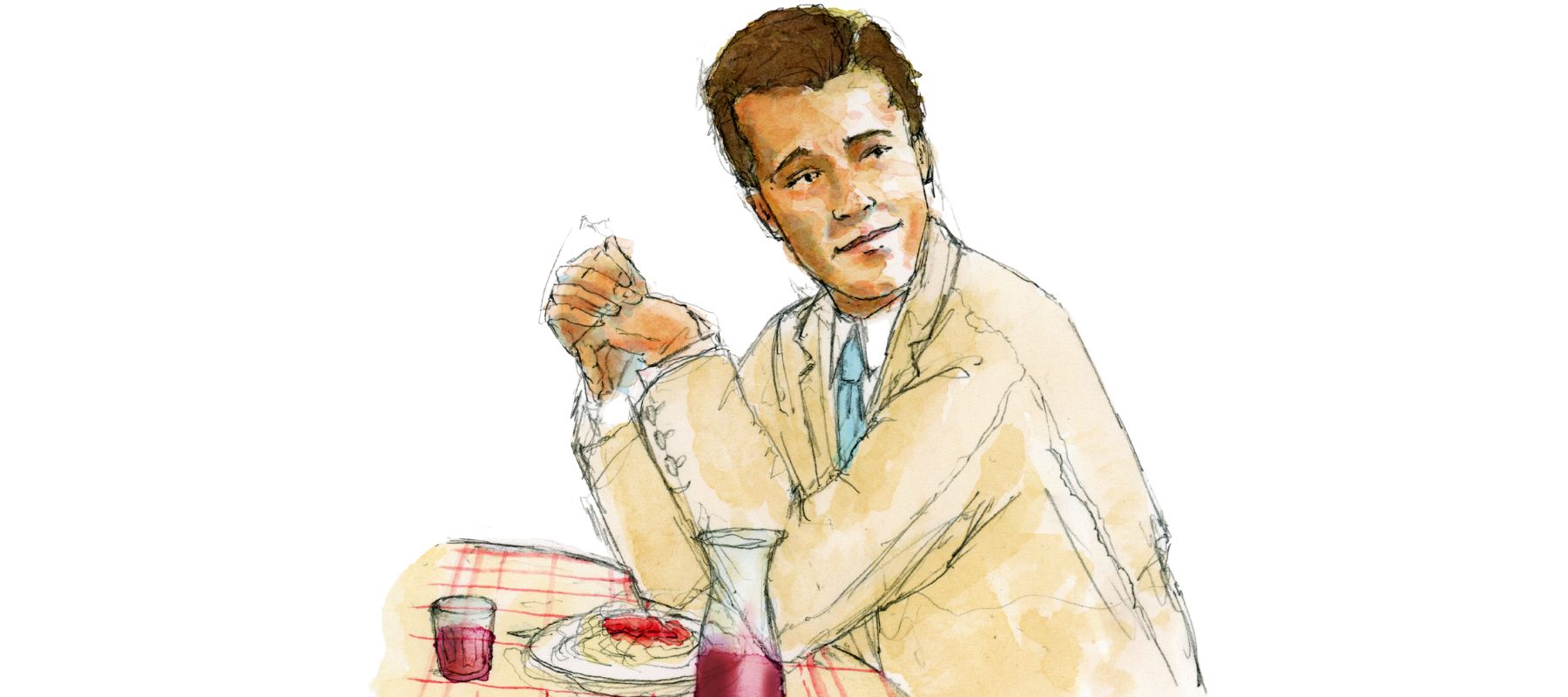
My Mecca for solo dining, however, is a venerable old establishment in Lisbon that shall remain nameless, but if you know, you know. It’s right on the main tourist drag, but a million miles away at the same time. Push open the door and the first thing you’re greeted with is a display counter full of ice, home to piles of clams, a selection of petite, beautiful little native oysters, glorious, ruby-red carabineiro shrimps, and an errant lobster, making moves in the window. Further through to the back, there are tables in another room; a monumental fireplace, exotic wood panelling, watercolors, and an enormous tapestry by the great Portuguese modernist, Sá Nogueira. All perfectly nice, but best left to the fur coat crowd. Up front at the bar is where you want to be – especially when you’re alone. There, you’ll find 12 leather stools and a thick counter of darkly varnished wood, softly lit, with busy waiters in oxblood aprons and black waistcoats, crisp, white shirts turned up at the cuffs. Without a word, they’ll provide the simple delight of hot toast, generously buttered, and a little plate of toasted, salted almonds. Before you know it, you’ll have a small tumbler of cold beer, too, served up on a pristine white place cloth, pressed with creases so sharp you could cut your hand on them. To follow, little steak sandwiches, comprised of nothing but crusty, fist-sized bread rolls and a medium rare pork steak, its juices softening and flavoring the bread, with a little mustard on the side. They aren’t on the menu but they’re what everyone comes for. That and the preta negra ham, cut by hand. The silence there is a particularly good vintage; warm, like the crackling between tracks on vinyl. I could sit there all day. A tower of little espresso saucers, discreetly stacked behind the bar, keeps track of the beer tab. Ask me to picture life in Lisbon, and that’s what I see. Not a tuktuk or a custard tart in sight.
There is a happy side-effect to all this solo dining, too. Appreciating solitude leads to appreciating company. I wonder if it’s not impossible to truly value the latter without being grateful for the former. Some might see it as selfish, taking yourself off alone. But by attending to your needs, spending time on a reset and something that you don’t divide with anyone else, when company presents itself again, you’ll actually be happy to share.
Illustration by Tommaso Montagnani