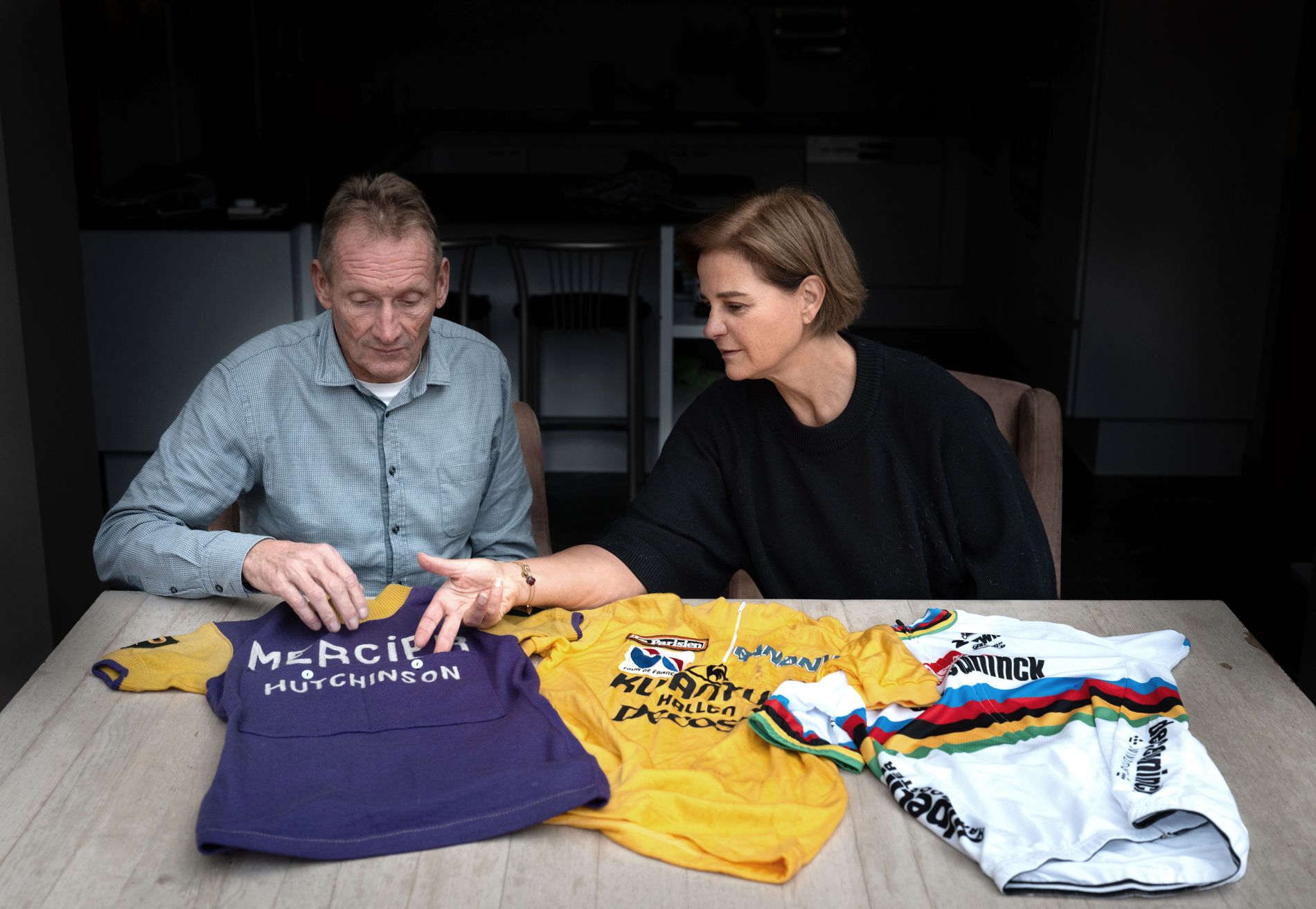
When it comes to cycling families, the Van der Poels are nothing short of royalty. Adrie, a frequent inGamba guide, was one of the best Classics riders of his generation, as well as a great cyclo-cross racer, and Corinne is the daughter of legendary French rider Raymond Poulidor. Together, they are parents to a certain Mathieu van der Poel, and as a result, they have lived through the heart of every generation of professional cycling since the 1960s.
Needless to say, inGamba was only too happy to spend a day with the couple at their home in the northeast corner of Belgium—and we’re always thrilled when Adrie joins us on our Classics trips.
Here is just a preview, as the full story will be featured in our annual inGamba Magazine, due out in early 2026. Stay tuned to learn how you can get your hands on the issue.

Adrie and Corinne, when it comes to couples in cycling, you two are pure pedigree. Corinne, you are the daughter of French icon Raymond Poulidor and Adrie, you are a great champion in your own right. You didn’t meet at a bike race by chance did you?
Corinne van der Poel: Oh actually no! We met on vacation. Okay, it was related to cycling, as we were both invited to an event in Martinique [in the French West Indies] at the end of a season. My father was invited. I went with him, and that’s where I met Adrie. Adrie had to do an exhibition race, but me, I was really just on vacation.
Adrie, among your long list of victories, you won both the Amstel Gold Race and the Tour of Flanders. Which victory was more satisfying to you? After all, you are Dutch, but have spent a large part of your life living here in Flanders.
Adrie Van der Poel: Oh that’s difficult. You know each race has its own history. Winning Amstel (ed. 1990) was very special because I am Dutch and that is our biggest race. But it was also special for me because I was coming off of a very bad year, and it was my first victory after a long, difficult period. Flanders, though, was special too.
The year I won Flanders (ed. 1986), I was really strong throughout the early season, but I didn’t win one race, and suddenly everything came together there. I remember, I chased back to the front of the race only 10 kilometers from the finish. But Sean Kelly was in the group, and on paper he was the fastest.
It is often when you are the strongest, however, that you make the biggest mistakes. I could see by the way he was riding that he was very confident. I knew I had to do something. So as we approached the sprint, I jumped early, but then I sat up and forced Sean to make the sprint from far out, and as a result I managed to come by him at the end. Sean and I are good friends, and we have talked about that day on occasion. I think you can say that Kelly was the best Classics rider of my generation and I think I only beat Sean three or four times in my career, so to do it in Flanders was incredible.
On that day, I wasn’t the strongest, but I was maybe the smartest. In cycling, you have to be strong enough to make the cut at the front at the end of the race, but once you are in a position to win, you also have to be smart.

One of the most overlooked aspects of your career was that you also managed to wear the yellow jersey in the Tour de France, although, if memory serves, it was all very confusing…
Adrie: Oh yes, what a day! It was early in the 1984 Tour. At the start of the stage, I was only a couple of seconds off of the yellow jersey and I knew that there was a chance I could get it, because back then there was not just one bonus sprint in a stage, but several.
I remember Ferdi Van Den Haute got away solo and there was a real fight for the remaining points on sprints, and I kept coming up short. But then I finished second in the bunch sprint to the line and third overall, so I picked up some time there. My team director was convinced that I’d actually moved into the race lead, but the officials awarded the yellow jersey to Ferdi. It was only after contesting the result that I got the yellow jersey, but the decision came was too late for the podium and they only brought me the jersey at the hotel in the evening. Normally, I would I think I would have worn the jersey for a few days at least, but my team director was really mad, and so we decided to let a breakaway go the next day and not defend the jersey, because of the way things were handled. And that’s what happened – a group got away. They finished nearly 30 minutes ahead of the field and Frenchman Vincent Barteau got yellow and wore it for 12 days. It was definitely frustrating then, but, well, that’s bike racing.
Corinne, as the daughter of Raymond, the wife of Adrie and the mother of Mathieu, you have witnessed first-hand three generations of cycling. How have you seen the sport change?
Corinne: The biggest difference is that sport is no longer so close to the public, and that disappoints me sometimes. I know that when my father was racing, and Adrie as well, that the cyclists were just a lot closer to the public. They were in the crowds. Today, they are so far from the public. The riders are in buses and they park in the paddock, where the public cannot go. I can understand that for the racers and race organizers, it is perhaps easier this way, but sometimes it is a shame for the public because that was always part of the charm of cycling. We still see it in cyclo-cross, but not really on the road, and it really touches me when I see fans waiting for a half hour or even longer, and they don’t get to see the riders.
Today, so many riders just get off the bus and ride to the start, and then after the race, they ride straight back to the bus and climb in. I have talked to Mathieu about this. I remember a few years ago at a cyclo-cross race, he was really disappointed after the finish and he just stayed in his bus. At first, there were like 100 people waiting outside the bus, but after an hour there were still 20 people waiting for him to come out.
I remember telling him, “Mathieu, those 20 people are your real supporters. You may not have had a good race, but you need to come down and sign autographs for them because they are there for you.” And he did it. For me it is a form of respect, that’s all.
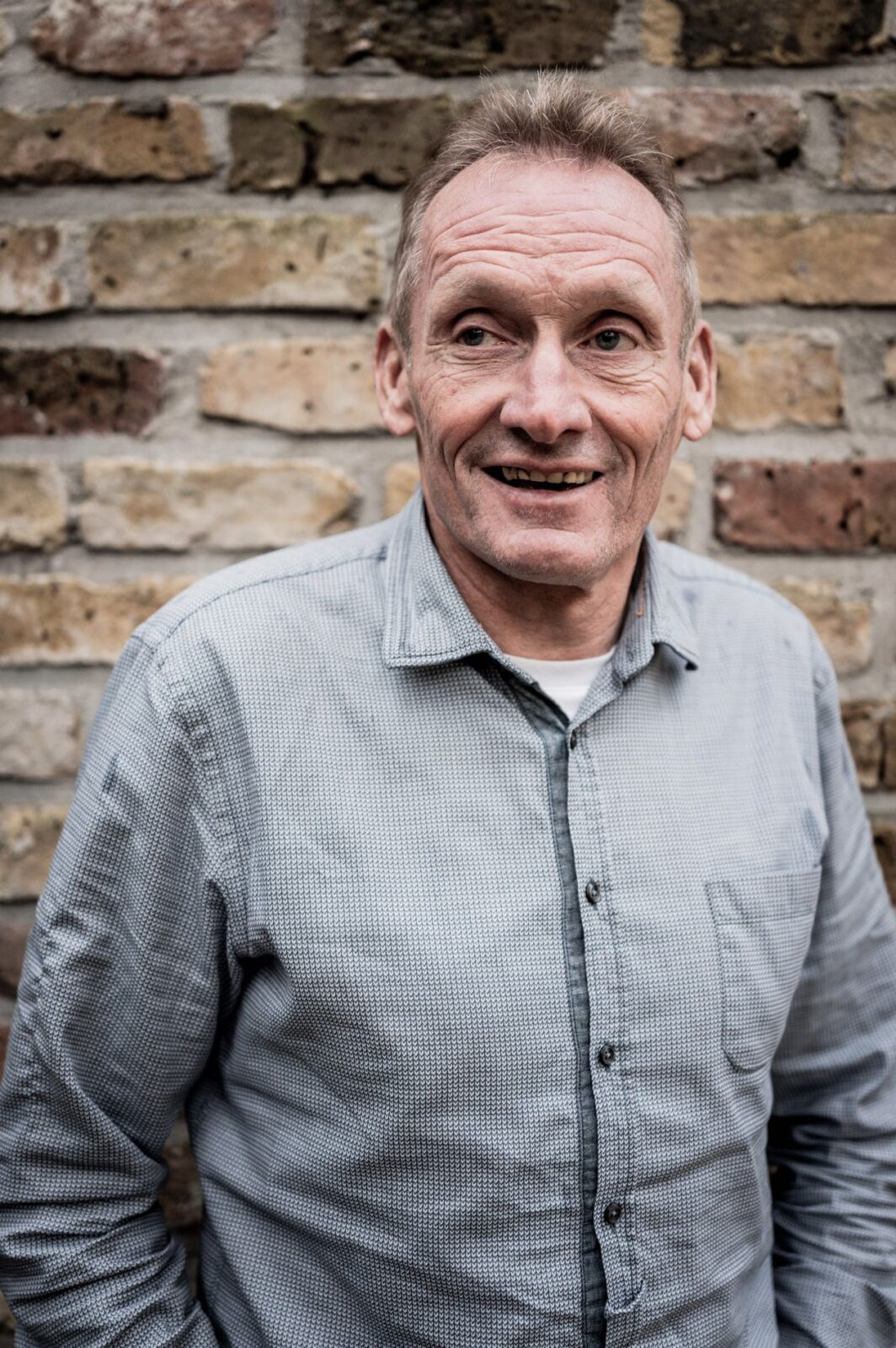
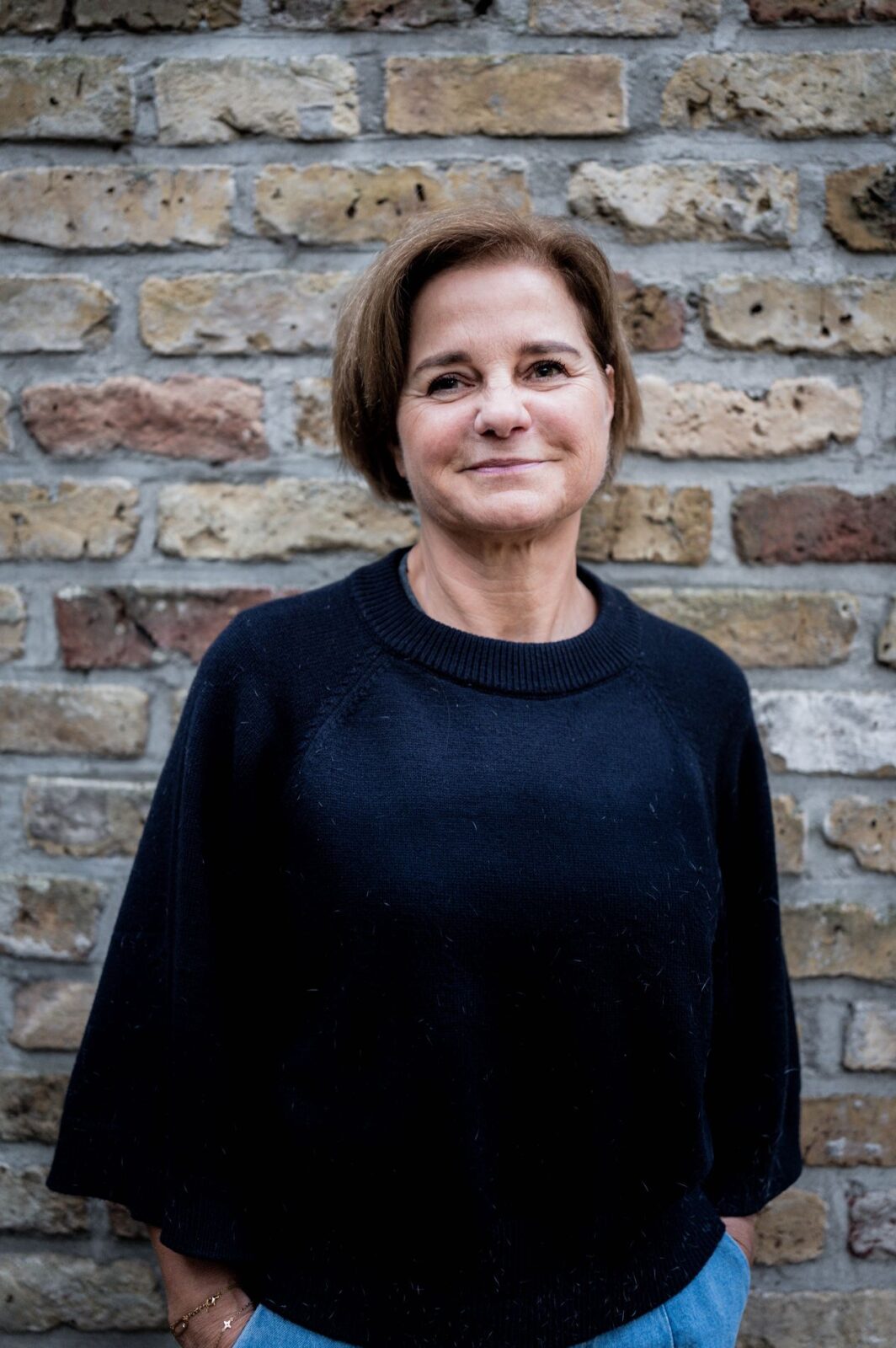
When did you two understand that Mathieu was a special talent?
Corinne: I saw that from the age of six years old, he was winning all of the races, and then I was always hearing from so many professional friends how talented he was. I think it was my father Raymond who was the first to really notice just how talented Mathieu was. And when he won his first World Championships as a junior, I really started to understand just how talented he was. I remember thinking then that maybe Adrie and my father were right.
Adrie: We saw very early that he had a lot of talent. But talent alone is not sufficient in cycling, as you know. It is not because you are talented that you will become a great rider. Those are really two separate things. But it was clear from a young age that he had a lot of physical talent.
Adrie, you are obviously in great shape, and I know you still ride a lot. And at least part of that time is spent with us here at inGamba. You do three trips with us now: Milan-San Remo, Tour of Flanders and Paris-Roubaix. How did you get involved with the company?
Adrie: I am old friends with Frank van Doorne, a long-time friend of inGamba, and the nephew of the patron of my old DAF Truck team. He asked me to help develop a trip around the Tour of Flanders a few years ago, and then asked if I was interested in being one of the guides. I already had some experience leading rides for some businesses and enterprises, and it was something I really enjoyed, so it was a good fit. And now I do the Flanders and Paris-Roubaix trips as well as the new Milan-San Remo trip. It’s just a lot of fun.
And if you could only watch one race per year, what would it be?
Adrie: Paris-Roubaix. It is the only race that is truly unlike any other. The Tour of Flanders is special also, but it comes after all of the Flemish classics, and when you have done Kuurme-Brussels-Kuurme, Waregem, Harelbeke and the others, you have gone over a lot of the same roads and climbs. Paris-Roubaix only comes once a year.