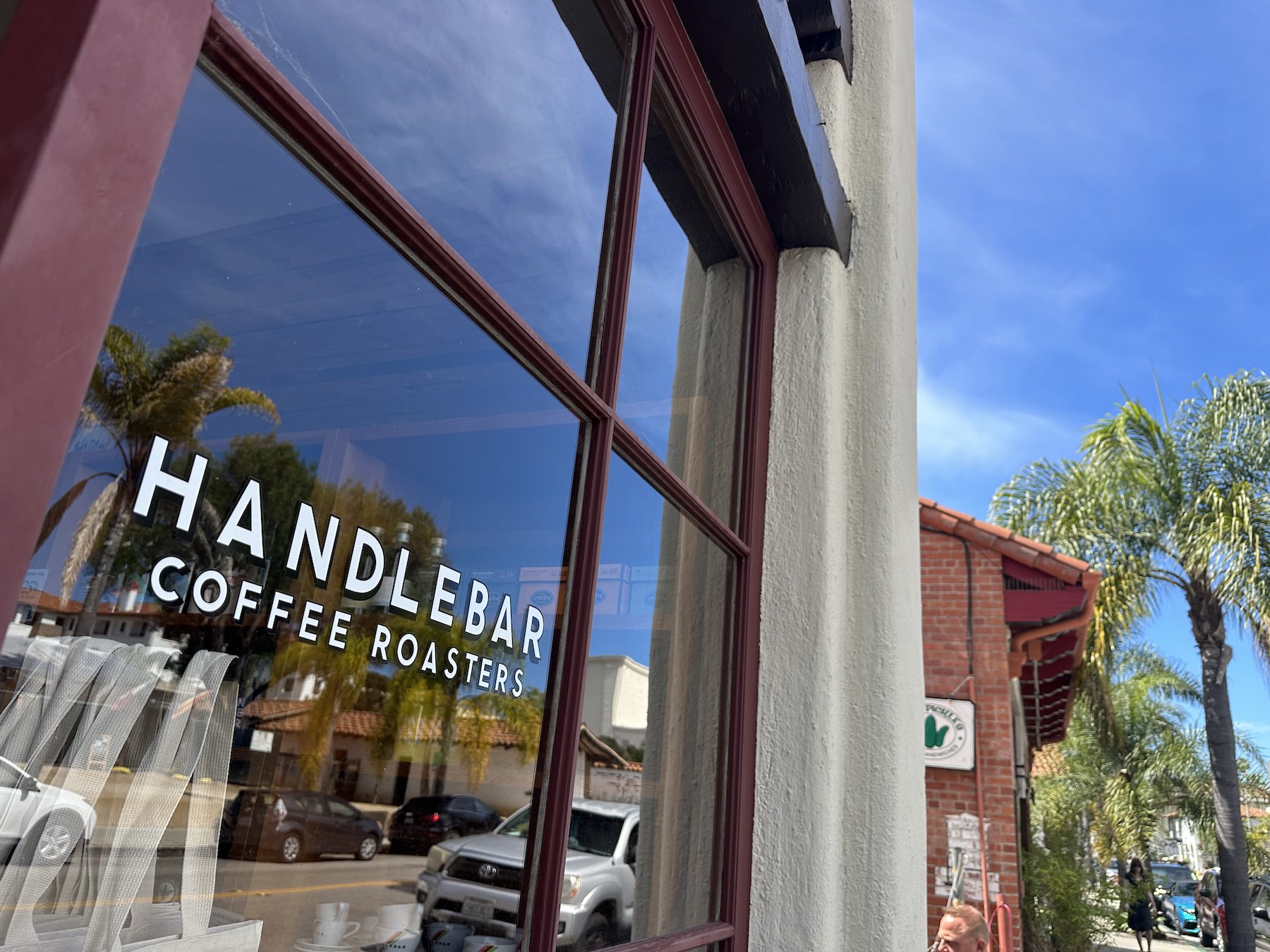

Walking into the Handlebar Coffee Roasters in Santa Barbara, California, is an interesting experience: It has a European feel, from the drinks to the pastries being served to the deeply knowledgeable staff to the outdoor seating that calls to mind a cafe you’d find in a spot like Siena, Italy, complete with a full bike rack at the front. But at the same time, it’s distinctly Californian: There is a copious amount of indoor seating, laptops are out, matcha lattes are served alongside of classic European coffee drinks like the cortado, and if you eavesdrop on the table next to you, you’re as likely to hear about someone’s tech startup as you are to hear about someone’s painful climb up the famed Gibraltar mountain, a feat often done prior to pedaling to the cafe for a tasty treat before heading home. It’s a perfect blend of California cool and Euro chic—which makes perfect sense, given the cafe’s origin story.
When Aaron Olsen retired from professional racing, he didn’t leave his love of the bike behind. He also was finally able to indulge in another treasured habit honed from racing across Europe: A growing love of coffee. Almost all of the riders in the pro peloton become coffee lovers at a point in their career: There’s nothing quite as refined and efficient as the mid-ride coffee stop, a chance to fill up water bottles, have a jolt of caffeine by sipping a civilized espresso from a ceramic cup with a saucer, then stuffing a chocolate croissant in your jersey pocket before continuing on. Whether you’re Olympic gold medalist Tom Pidcock or a masters rider out for a long Sunday jaunt, you’ll almost certainly both end up at a cafe at some point in the ride. In Girona, a hotspot for cyclists to live in the offseason, the cafes often look like a pre-race autograph signing opportunity, thanks to the preponderance of pros who spend hours with friends over cappuccinos pre- and post-ride.

That’s the culture that Olsen wanted to capture when he came home after 14 years of racing, including two editions of the Giro d’Italia. Coffee that was roasted to perfection, from a variety of locations so that coffee lovers and new coffee aficionados could learn to taste the difference between Guatemalan and Brazilian beans. He also wanted to create a hub for cyclists, a gathering place that was reminiscent of his favorite coffee spots in Italy. And so, Handlebar Coffee Roasters was born in Santa Barbara in 2011.
Before I knew inGamba, I knew Handlebar. I spent my first winter—2013—as a cyclist training in Ventura, California, down the coast from Santa Barbara, with a group of young cyclists. The highlight of our week? Half of the group would ride a 130 mile route from the house to Handlebar, while some of us would drive closer to the shop and do a loop, then meet at the cafe and all drive home together. Some of the most memorable moments I’ve had on the bike happened here here, riding iconic climbs like the aforementioned Gibraltar or Refugio, then sitting down in sweaty kit to enjoy a cortado. It was the first time I thought of coffee as an experience, something to savor. 13 years later, whenever I can, I make the trip back to Santa Barbara and do a ride or run, followed by a stop at Handlebar, and in those moments, I feel like the young, excited rider I was then.

That’s partially because at Handlebar, nothing is left to chance. The experience is dialed in: Olsen is particular about everything about coffee, from the obvious like the origin of the beans—from where they’re grown to the type of soil they’re grown in—to the less obvious details, like the milk alternatives used, or the temperature the coffee and espresso are brewed at. (In the past, he’s explained that when making coffee at home, the optimal temperature is less than boiling, somewhere in the low 200-degree mark. In the cafe, they pull espresso shots and brew their coffee at 202 degrees. Any higher, and you risk burning the beans.
Coffee, like wine, is meant to be sipped and savored. Even a quick espresso stop can be slowed down by a few seconds to truly taste the coffee. A good espresso—one that has a heavy mouthfeel and the right blend of acidity and sweetness—can be a ride-transforming experience, if you give it the opportunity. At inGamba, we want guests to truly experience all the details of the perfect ride day, and that includes the cafe stop.

- Espresso: Single shot of very concentrated coffee (similarly, a Ristretto—popular in Italy—is even more concentrated, while a Doppio is a double shot of espresso. We only recommend the Doppio if you’re truly jet-lagged and need the boost!)
- Cappuccino: Espresso with an equal amount of foamed milk (the most popular coffee stop order)
- Americano: A shot of espresso with hot water added—and often, this is the closest option to a standard cup of brewed coffee that will be available in many cafes, so if you’re craving a plain black coffee, this is your order)
- Macchiato: Espresso with a dollop of foamed or steamed milk on top (not to be confused with the sugary drinks that are mislabeled as Machiattos in the US!)
- Cortado: Espresso with an equal amount of steamed milk (great if you love the taste of a cappuccino but don’t love the texture of foamed milk)
- Café au lait: Brewed coffee with steamed milk (similar to a latte, but again, unlike the American editions that are often packed with shots of flavor)
- Espresso con Panna: Espresso with a dollop of whipped cream on top (our personal favorite indulgence)
You can also bring a piece of our Borgolecchi morning home to you by buying beans from Handlebar Coffee Roasters, since that’s our preferred source when it comes to coffee that we brew at home. While the two cafes are located in Santa Barbara, you can still order Handlebar’s coffee as a one-time purchase, or splurge for a subscription to enjoy exciting new flavors and hone your coffee palate with a bag showing up at your door every week.